Client Payment Plans for Law Firms: Setup, Tracking and Trust Considerations
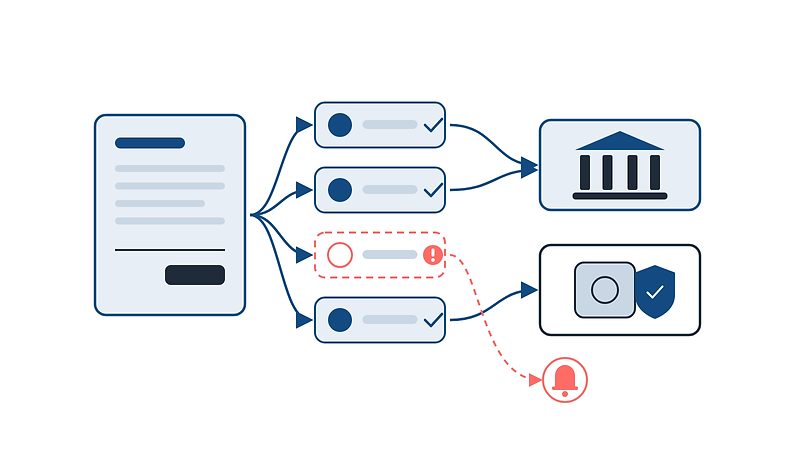
Write the arrangement down, tie every installment to an invoice, and decide which bank account each payment belongs in before the first one arrives.
Overview
A payment plan lets a client pay a law firm's fees in scheduled installments rather than one lump sum, and it works when three things are settled in advance: the written terms, how each installment applies to specific invoices, and which bank account receives each payment. Firms that skip any of the three usually discover the gap in the aging report a few months later.
Most law firm payment plans start informally. A partner agrees on a call that a client can pay "over a few months," and accounting learns about it when the first partial payment arrives without instructions. The guidance below is an operating model for finance teams and practice leaders. It is not legal advice, and the professional conduct rules that apply depend on where the firm practices.
Decide when a payment plan makes sense
Client payment plans are a collection tool, so treat them as a decision with criteria rather than a favor granted case by case. The firm is extending credit, even when no interest is charged, and the decision should sit with someone who can see the client's payment history and the matter's budget.
Reasonable criteria to agree on before offering a plan:
The balance is large enough that a single payment is unrealistic for this client.
The client has paid earlier invoices, even if late, and has not disputed the work.
The matter will continue, so the plan does not outlast the relationship.
Someone in finance owns the plan and will see a missed installment within days.
The responsible lawyer agrees to how the plan interacts with further work.
When those conditions are not met, a shorter extension or a revised budget may be the better conversation. A plan offered to a client who already disputes the bill tends to postpone the dispute.
What the written arrangement should cover
ABA Model Rule 1.5 says the basis or rate of the fee should be communicated to the client, preferably in writing, and that changes should also be communicated. A payment plan changes when and how the client pays, so put it in writing even when the fee itself is unchanged. Your state's version of the rule, and any bar guidance on fee agreements, governs the details.
A workable written arrangement names the invoices or balance covered, the installment amounts and due dates, the payment method and who pays any processing fee, what happens after a missed installment, and whether new work is billed separately or added to the plan. If the plan charges interest or a late fee, confirm the consumer credit and professional conduct rules that apply before including it. Keep the signed or acknowledged version with the matter's billing records so the person chasing a missed payment can find it.
Map scheduled payments to invoices and aging
The plan has to live in the billing records, where the aging report can see it. Each installment should apply to a named invoice, oldest first unless the arrangement says otherwise, so the aging report shows what the client actually owes and how old it is. Applying a payment "on account" without an invoice is the most common reason a payment plan looks current in conversation and overdue on paper.
The worked example below shows a $12,000 billed balance on two invoices, paid in four monthly installments of $3,000.
Due date | Installment | Applied to | Open balance after | Aging status of what remains |
Jan 15 | $3,000 paid | Invoice 1041 ($7,000) | $9,000 | Current per plan |
Feb 15 | $3,000 paid | Invoice 1041 | $6,000 | Current per plan |
Mar 15 | $3,000 missed | None | $6,000 | Invoice 1041 balance ages; follow-up starts |
Apr 15 | $6,000 paid (catch-up) | 1041 ($1,000), 1058 ($5,000) | $0 | Closed |
Two reporting decisions need an answer before the first installment. First, does the aging report measure from the original invoice date or from each installment's due date? Most firms age from the invoice date and add a note or flag for balances under an approved plan, which keeps the report honest. Second, who sees the flag? The billing partner, the collections owner and whoever approves new work on the matter all need it.

Card versus eCheck and ACH: fees, timing and returns
The payment method changes the cost, the timing of funds and the ways a payment can come back. An electronic check (eCheck) is generally processed as an ACH debit from the client's bank account, so the two are usually discussed together.
Factor | Card | eCheck / ACH debit |
Processing cost | Usually a percentage of each payment | Usually lower, often flat or capped; confirm with your processor |
When funds arrive | Typically within a few business days | Typically a few business days; can be slower to clear |
How it can reverse | Chargeback or dispute through the card network | Return (for example insufficient funds) or an authorization dispute |
Fit for installments | Convenient for smaller, frequent amounts | Common for larger amounts where card fees add up |
Trust account risk | Fees or chargebacks debited from the receiving account | Returns debited from the receiving account |
Read the reversal row carefully. An ACH payment can look settled and then return, sometimes after the firm has applied it to an invoice. Wait for your processor's settlement confirmation before treating a payment as final, and build a reversal step into the workflow so the invoice reopens and the aging report updates.
Decide which account receives each payment
ABA Model Rule 1.15 requires client funds to be kept separate from the lawyer's own and says fees and expenses paid in advance go into a client trust account, to be withdrawn only as fees are earned or expenses incurred. That distinction drives the routing question for a payment plan.
Installments on invoices for work already performed and billed are generally earned fees, which many firms receive into operating. Installments that pre-fund future work look like advance fees and generally belong in trust. A plan that mixes both, such as catching up an old balance while topping up a retainer, needs an explicit split in the written terms and in the receipt entry.
Processor fees and chargebacks are where good intentions fail. If a processor can debit fees or reversals from the account that received the payment, a trust account can end up paying the firm's costs or another client's chargeback. Ask how your processor separates these, and check your state bar's guidance on trust deposits by card and ACH. The ABA Model Rules on Client Trust Account Records commentary also notes that electronic transfers into and out of trust must be recorded. Your jurisdiction's rules control; this is a list of questions, not an answer.

Track missed installments before they become write-offs
A missed installment is cheap to fix in its first week and expensive by its third month. Give the plan an owner and a short, written escalation path that starts the day after a due date passes.
A simple escalation sequence:
Day 1 to 3: a reminder that references the plan and the invoice, sent by billing.
Day 7: a call or personal email from the collections owner.
Day 14: the responsible lawyer is told and decides whether new work continues.
Day 30: the plan is reviewed, restructured in writing or closed and handled as ordinary collections.
Review every active plan in the monthly A/R meeting alongside the aging report. The questions are the same each month: which plans are current, which missed a date, and which matters are still generating new invoices that are not part of any plan. For the wider collections picture, the law firm financial management guide covers how billing, receivables and reporting connect.
Where MATTEROOM fits
MATTEROOM's billing management page describes Smart Billing for hourly rates and recurring retainers, with automated invoices, reminders, and bill approvals from email without logging in. It also describes multi-currency billing, a billing audit trail that records who changed what and when, and prebill tracking with key performance indicators that include aging receivables. The accounting page describes trust accounting integration and logging of every transaction.
MATTEROOM's news blog has announced an integration with LawPay for accepting online payments directly from client invoices. That announcement does not list every supported payment method or describe installment scheduling, so treat both as demo questions. In a demonstration, ask whether an installment schedule can be recorded against specific invoices, whether reminders can follow installment due dates, which LawPay payment methods are available in your setup, how payments post and reverse, and how trust and operating deposits are kept apart.
Related reading: legal billing automation for reminder and approval workflows, legal trust accounting software for trust controls, and law firm accounting software explained for how receipts reach the ledger.
Frequently Asked Questions
Should a law firm charge interest on a payment plan?
Some firms do and many do not. Interest or late fees can bring consumer credit rules and bar guidance into play, so confirm what applies in your jurisdiction before adding them to the written terms.
How should installments appear on the aging report?
Apply each installment to a named invoice and keep aging from the invoice date, with a flag showing the balance is under an approved plan. That keeps the report accurate and still tells reviewers the client is on schedule.
Can installments go into the trust account?
Payments that are advances for future fees or expenses generally belong in trust under rules modeled on ABA Model Rule 1.15. Payments of earned, billed fees generally do not. Your state's rules and bar guidance decide the details.
Is an electronic check the same as an ACH payment?
An eCheck is usually processed as an ACH debit from the client's bank account. It tends to cost less than a card payment but can be returned after it first appears settled.
What happens when a client misses an installment?
Follow the escalation path in the written arrangement: reminder, personal contact, lawyer decision on further work, then restructure or close the plan. Update the aging report as soon as the due date passes.
Does MATTEROOM automate installment schedules?
MATTEROOM's published pages describe automated invoices, reminders and an aging receivables KPI, and a LawPay integration for paying from invoices. Ask the team to show how an installment schedule would be set up and tracked in your configuration.
Walk Through Your Payment Plan Workflow
Bring a synthetic matter with a billed balance, an installment schedule and one missed payment to a MATTEROOM billing demonstration.